July 11, 2026
You have a big day coming up, and part of that involves picking out an outfit that doesn’t just look good in photos, but actually holds up when you are miles into a mountain trail. Choosing adventure elopement outfits is all about balance. You want to look spectacular, but you also need to be able to move, sit, and maybe scramble over a few rocks without stressing about a rip.
Here is how to pick outfits that handle the elements as well as you do.
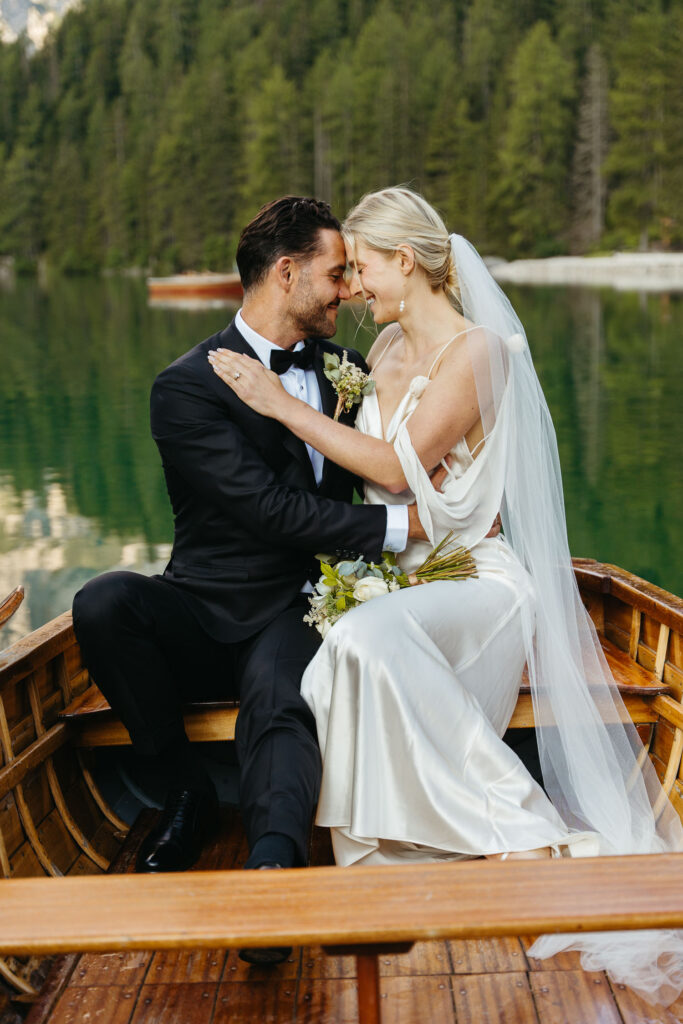
Check out Maddy and Danny’s elopement at Lago di Braies to see how they fared in their attire.
Let’s Talk Materials (The Good, the Bad, and the Wrinkly)
When you are hiking, your dress is going to be exposed to the elements. You want fabrics that are forgiving and handle a backpack well.
Lace & Beading: Heavy lace can snag easily on branches or sharp rocks. If you love the look, try to keep it on the bodice rather than trailing along the dirt.
Chiffon: A major winner for adventure weddings. It is incredibly lightweight, catches the wind perfectly for photos, and is almost impossible to wrinkle. If you pull it out of a packing cube, it looks good to go.
Tulle: Another great option if you want volume without the weight. It gives you that fairytale floaty look, handles being stuffed into a pack surprisingly well, and shakes out easily at the summit.
Crepe: A solid, classic choice. It has a bit of weight, so it hangs beautifully, and it is usually durable enough to handle some rubbing against rough rock surfaces.
Silk: Proceed with extreme caution. While raw silk is gorgeous, it is notoriously high-maintenance. It will wrinkle if you even look at it wrong, and trying to hike in it means you will look like a crumpled piece of paper within two seconds of hitting the trail. It also shows water and sweat instantly.
Breaking the Rules on Color
Who says you have to wear white? One of the biggest perks of an elopement is that you answer to no one, and that includes traditional bridal colors.
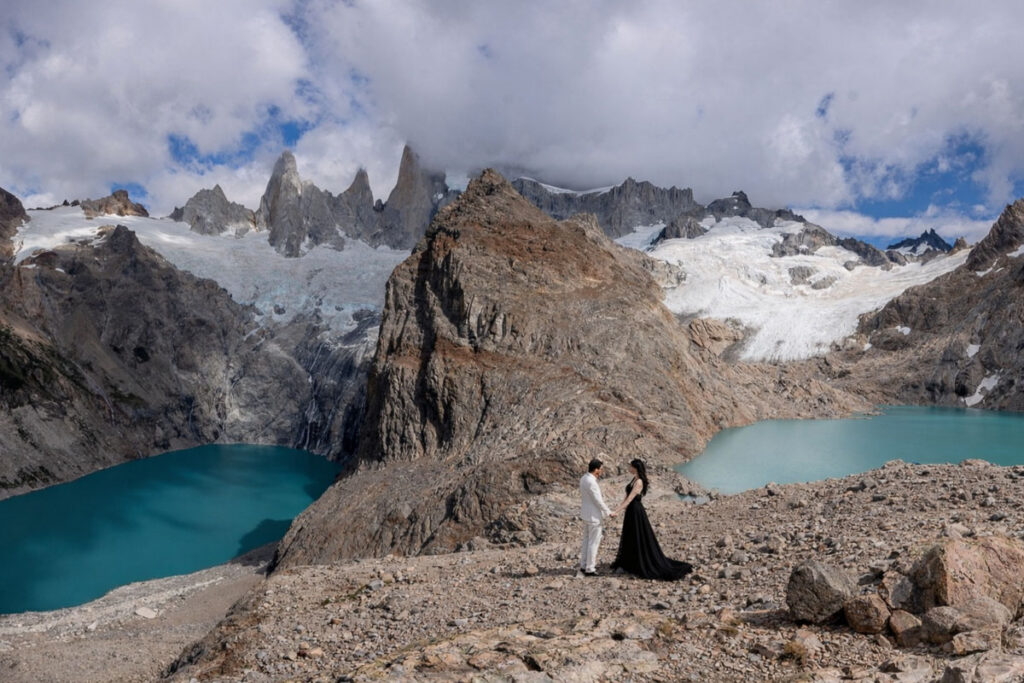
Stepping away from bright white can actually look incredible against vast natural backdrops. Blush tones, dusty blues, deep emeralds, soft lavender, or even a bold black dress can make a massive statement.
The trick is contrast. A black or deep red dress against the stark white landscapes of Iceland or a snowy mountain pass looks incredibly cinematic. A soft lavender or sage dress blends beautifully into alpine meadows. If you do want to stay traditional but add a twist, look for dresses with a colored undertone, like a champagne, nude, or smoky gray base layer with white tulle or lace overlaid on top.
Dressing for the Seasons: Summer vs. Winter
The weather in the mountains or along the coast changes fast, so your dress needs to match the climate.
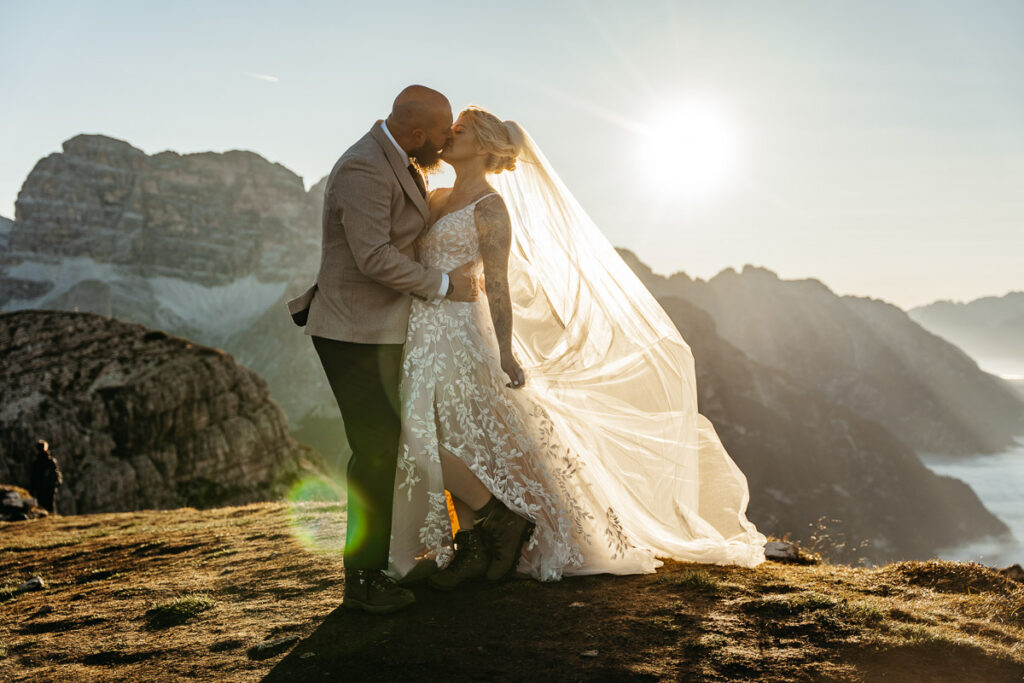
For Summer Elopements
Think about breathability. You want lightweight fabrics like chiffon or organza that won’t trap heat while you are moving.
Pro-Tip: Avoid tight, heavy linings that stick to your skin when you sweat.
The Cut: Strapless or thin straps are great for keeping cool, but make sure the bodice is secure enough that it won’t slip while you walk.
For Winter Elopements
This is where you want heavier fabrics like velvet, brocade, or thick crepe to help block the wind.
Pro-Tip: The secret to winter elopements is nude fleece-lined leggings hidden underneath your skirt. Make sure your dress has enough room to layer up underneath without restricting your movement. Also, a nice winter-style cape can be a great way to keep warm.
The Cut: Long sleeves are a beautiful choice for winter, but do not rely on them alone to keep you warm.
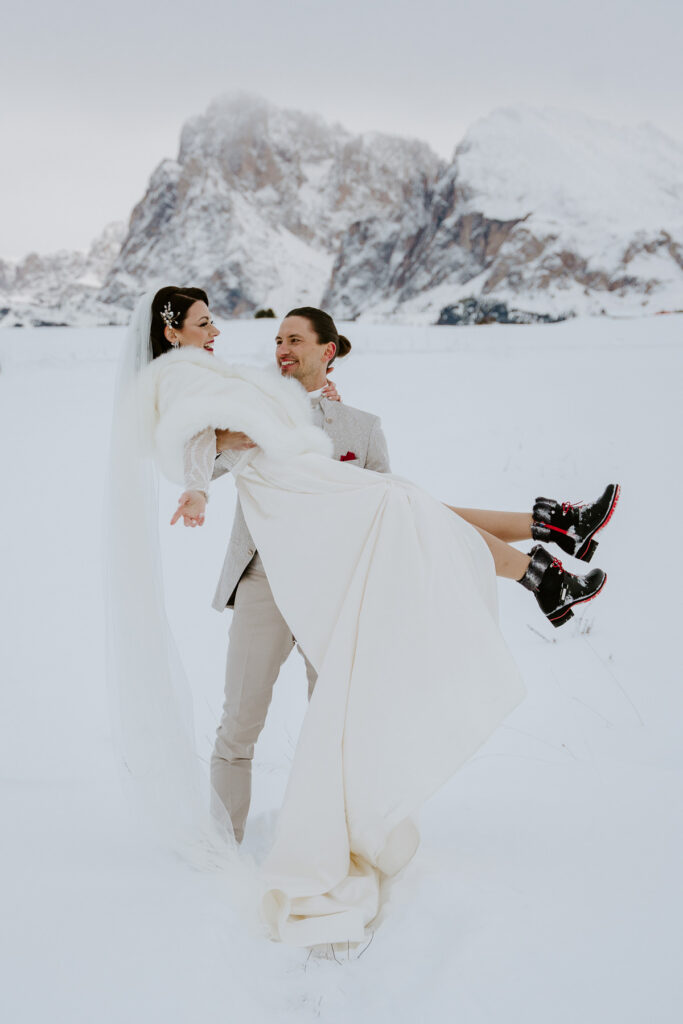
See more from Nadine and Dennis’s winter wedding in the Dolomites.
The Shape and Length of Things
Think about your legs. You need to be able to lift your knees to climb a trail, sit comfortably on a log, or walk through tall grass.
A-line skirts are usually the best shape for hiking because they flare out just enough to give your legs complete freedom. If you want a train, just make sure it is detachable or easy to bustle. Dragging a long train uphill is a quick way to get frustrated.
Long vs. Short Dresses
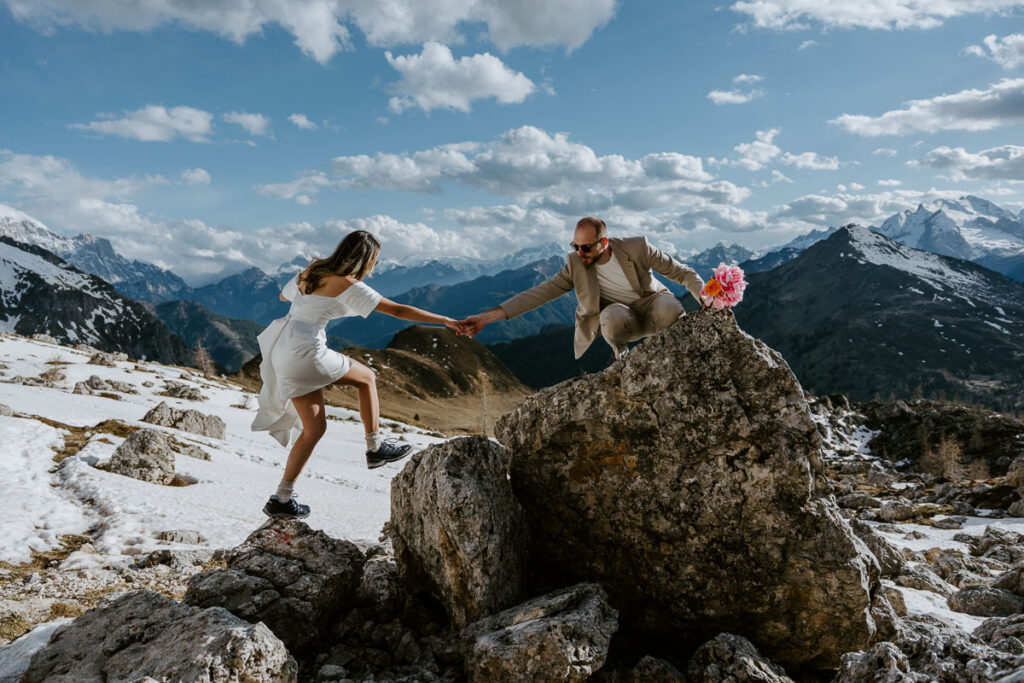
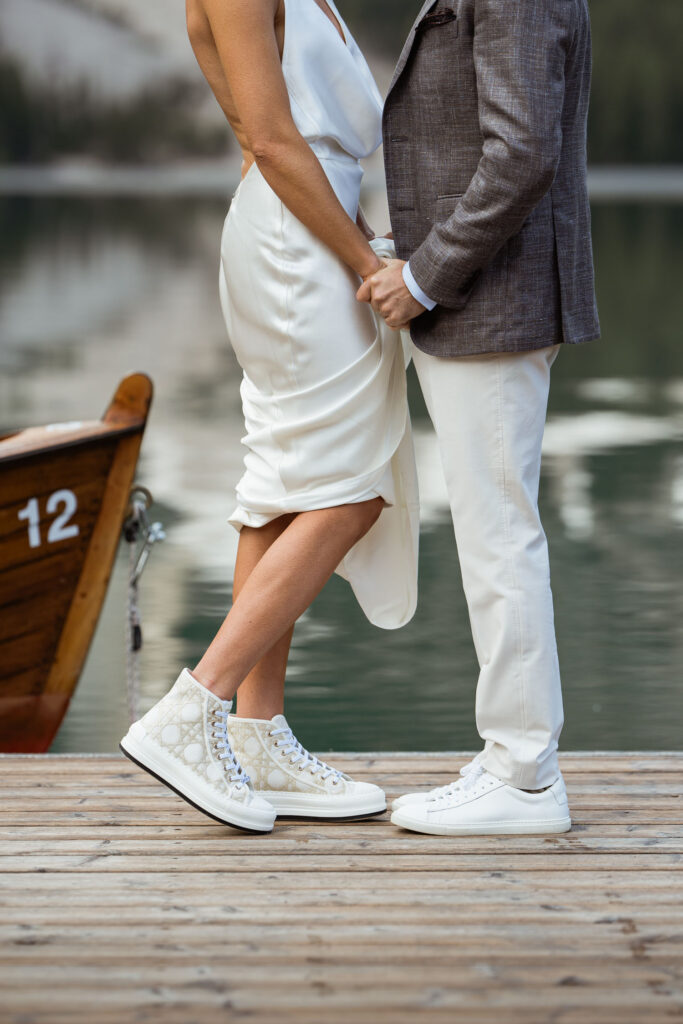
While long, flowing gowns are the traditional choice, shorter dresses are having a massive moment. A midi or tea-length dress is incredibly practical for a hiking elopement. You completely eliminate the risk of dragging your hem through mud, stepping on your own skirt, or tripping over rocks. Plus, it lets you show off a killer pair of shoes.
The Big Veil Debate: Pros and Cons
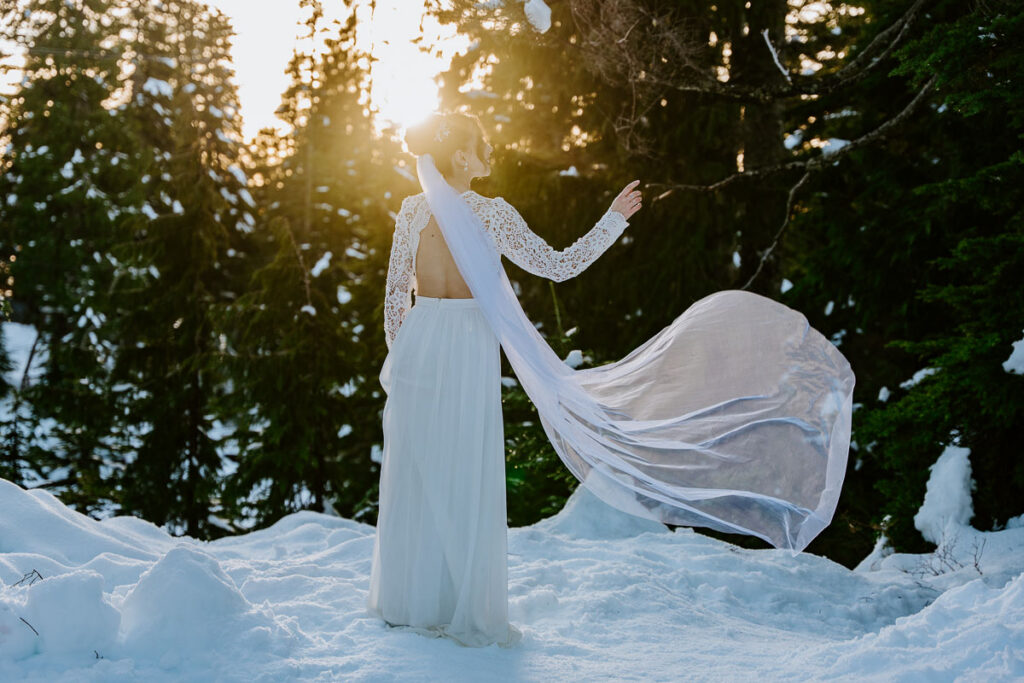
Veils look unbelievably cinematic in mountain wind, but they require some strategy.
- The Pros: A long veil catches the wind like nothing else. It adds instant movement, drama, and a classic bridal feel to a wild landscape.
- The Cons: They act like a sail. If the wind picks up on a cliffside, a long veil can pull your head back or constantly whip into your face. They are also absolute magnets for twigs, burrs, and pine needles on the trail.
- The Verdict: If you want a veil, go for it, but make it easily detachable. Keep it in your pack during the hike, clip it in for the ceremony and photos, and take it out when the wind gets too intense.
Menswear: Style Meets the Trail
Grooms, you are not off the hook here. A standard, stiff tuxedo belongs in a ballroom, not on a mountain ridge. You need gear that allows you to move freely while still looking completely sharp.
Suit Colors & Environment Contrast
When picking a suit color, look up your exact location beforehand. You want to complement the scenery, not disappear into it.
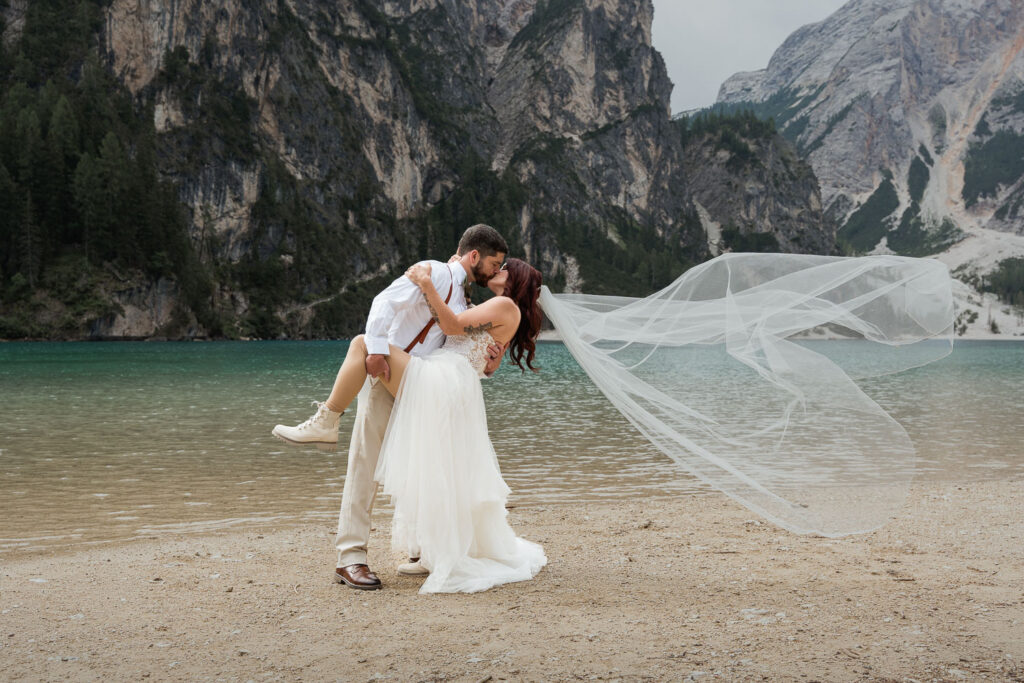
- The Golden Rule: Avoid matching the dominant color of your landscape. If you are eloping in a lush green forest, skip the green suit and opt for a rich burgundy or navy. If you are standing in a grey, rocky landscape like the Dolomites, avoid charcoal or light beige and choose a warm rust, deep plum, or classic dark blue.
- Texture Matters: Tweed, wool blends, and matte fabrics photograph beautifully outdoors because they add depth and texture. Avoid high-shine fabrics that reflect harsh sunlight.
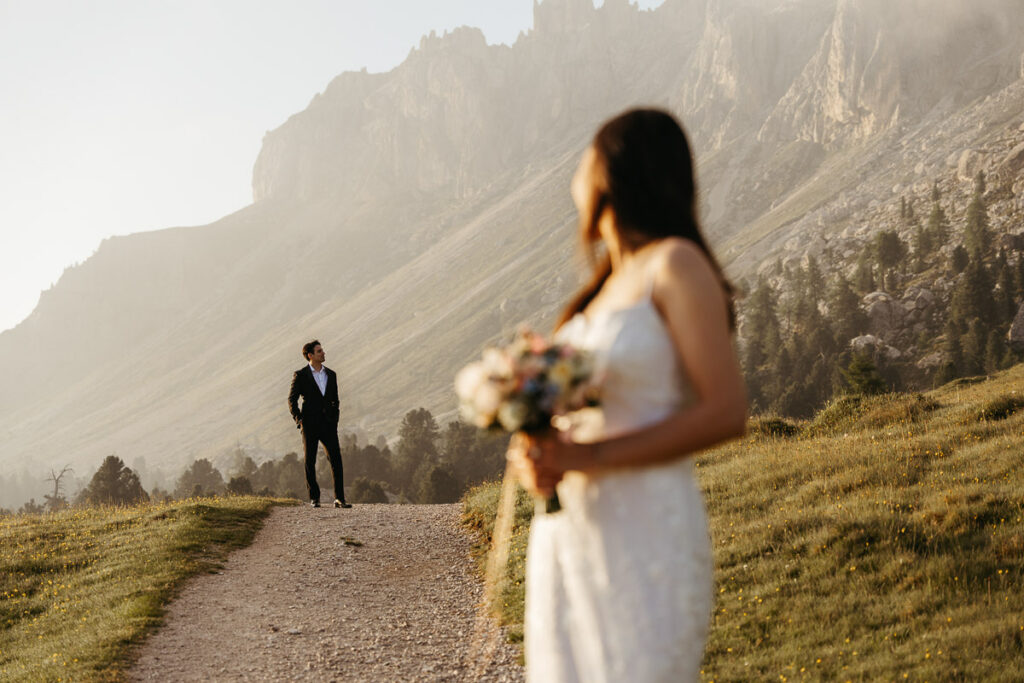
See more from Vy and Alex’s intimate wedding in the Dolomites.
Tie vs. Bowtie vs. Suspenders
If you want a relaxed, adventurous look, skip the traditional silk tie entirely. A textured wool tie or a relaxed bowtie adds a lot of personality. Alternatively, a lot of grooms ditch the tie altogether, unbutton the top two buttons of a crisp linen or cotton shirt, and rock a leather pair of suspenders. This looks incredibly stylish, keeps you cool during a summer hike, and gives you that effortless, rugged vibe once the suit jacket comes off.
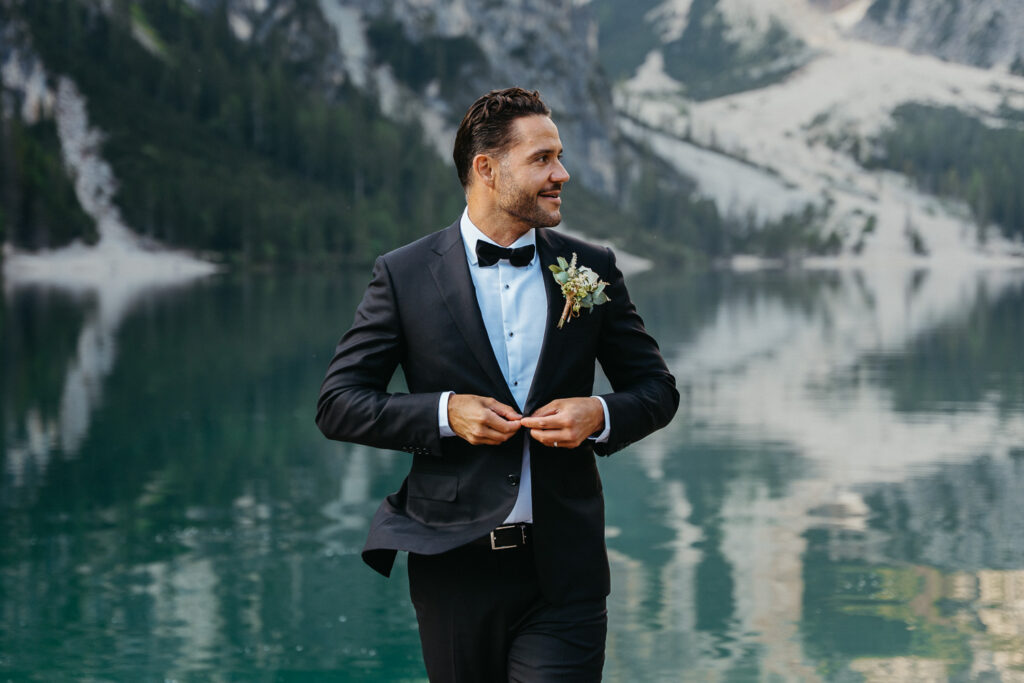
Groom Footwear
Just like the bridal shoes, traditional patent leather dress shoes are out. They have zero traction and will be ruined by dirt instantly. A sleek, high-quality leather boot—like a clean pair of leather dress boots, Blundstones, or rugged Thursday Boots—looks fantastic under a tailored suit pant. If you are doing a serious hike, wear your actual technical hiking boots for the trail and swap into your clean leather boots at the top.
Buying Ethically
If you want to keep a lighter footprint or save some budget, consider buying secondhand. Sites like Stillwhite or local consignment shops are full of gorgeous dresses that were worn once and are looking for a new adventure. It is a great way to find a designer gown that might otherwise be out of your budget, and rewearing a dress is the ultimate sustainable move.
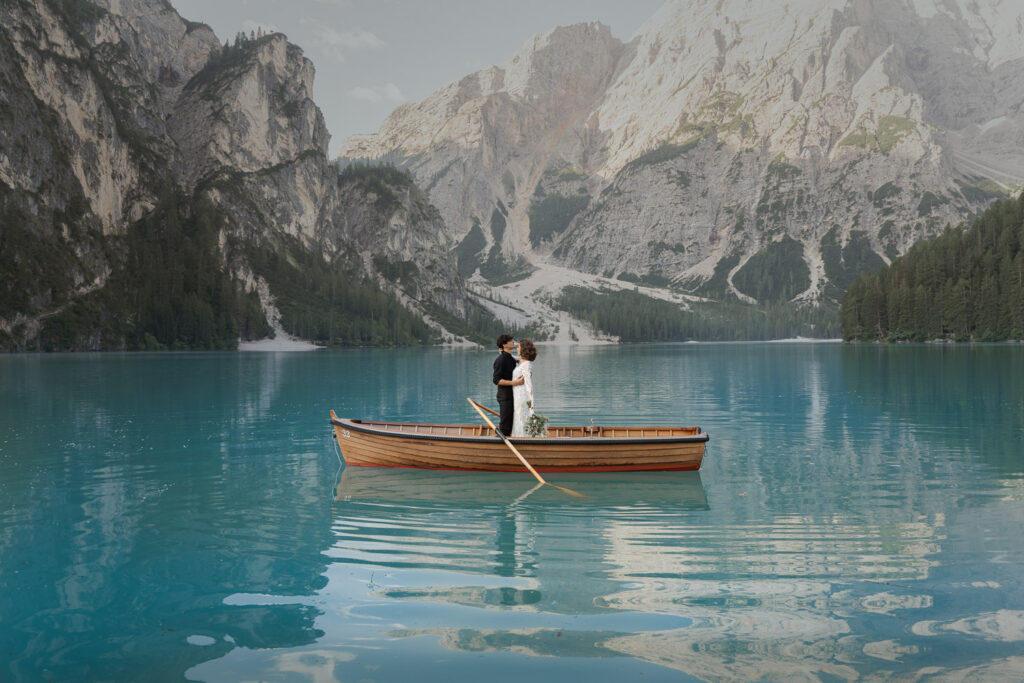
See more from Terry and Jon’s elopement at Lago di Braies.
Final Thoughts on Footwear
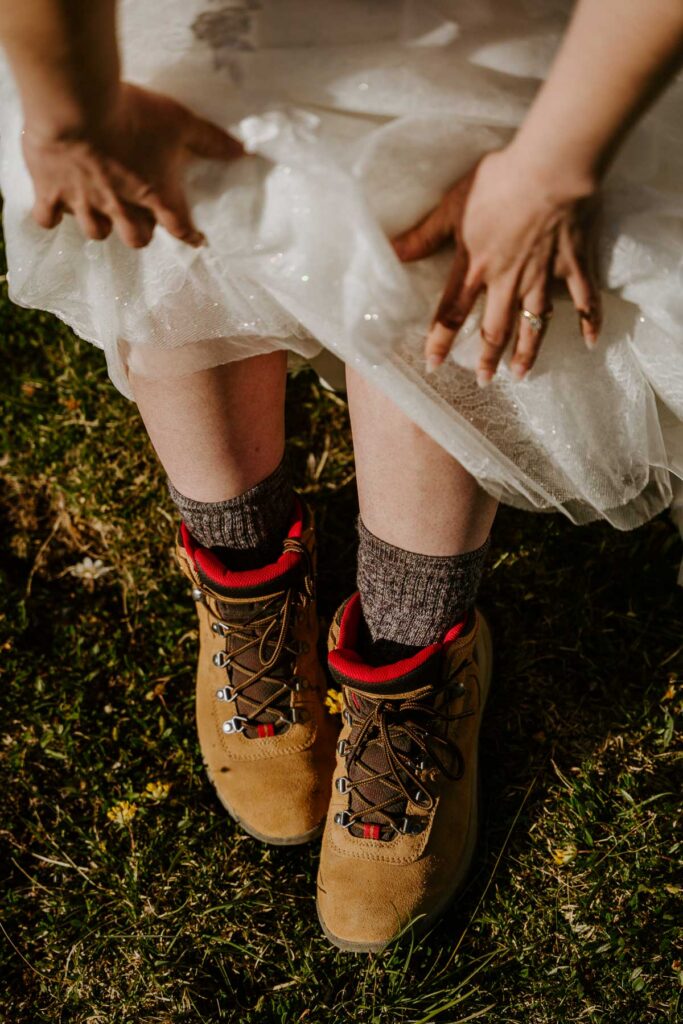
Please, for your own safety, leave the traditional heels at home.
Whether you opt for matching rugged hiking boots, clean leather trail boots, or a fun pair of sneakers, practicality is your best friend. Keep a fresh pair of comfy wool socks in your pack too. Your feet will thank you after a long day outside.
Your elopement day is about the experience. If your clothes and shoes are comfortable, you are going to have a much better time taking in the views.

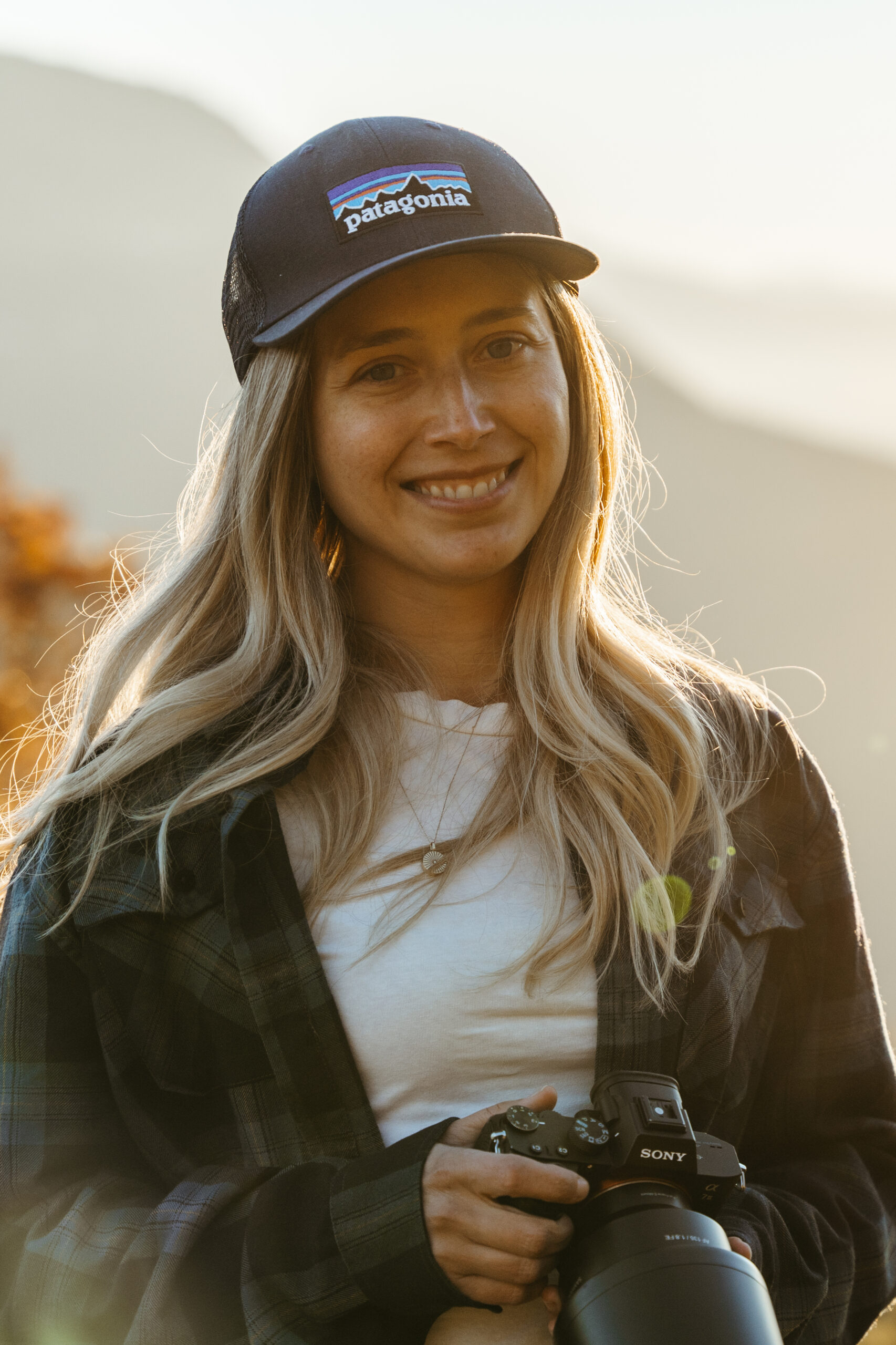
My name is Shawna (she/her) and I am an Elopement Photographer & Designer. I’m originally from Vancouver, Canada, and I now live in Europe and specialize in the places I know best around me: the Dolomites, Alps, and Iceland. I work hard to build the perfect itineraries for my clients and help them choose a location that really represents them. Having travelled to nearly 60 countries on a shoe string, I’m also pretty well versed in creating experiences in other countries.






Comments